What is momentum investing? I’m going to give you the whole idea in one sentence, then the research behind it, and then the catch, because there’s always a catch.
Here’s the one sentence: momentum investing means owning the stocks that have been rising the strongest, because recent winners tend to keep winning for a while.
That’s it. Now let me show you why that works, and why it isn’t as easy as it sounds.
Studied for more than 30 years
This isn’t a theory somebody posted online. It’s one of the most studied ideas in finance.
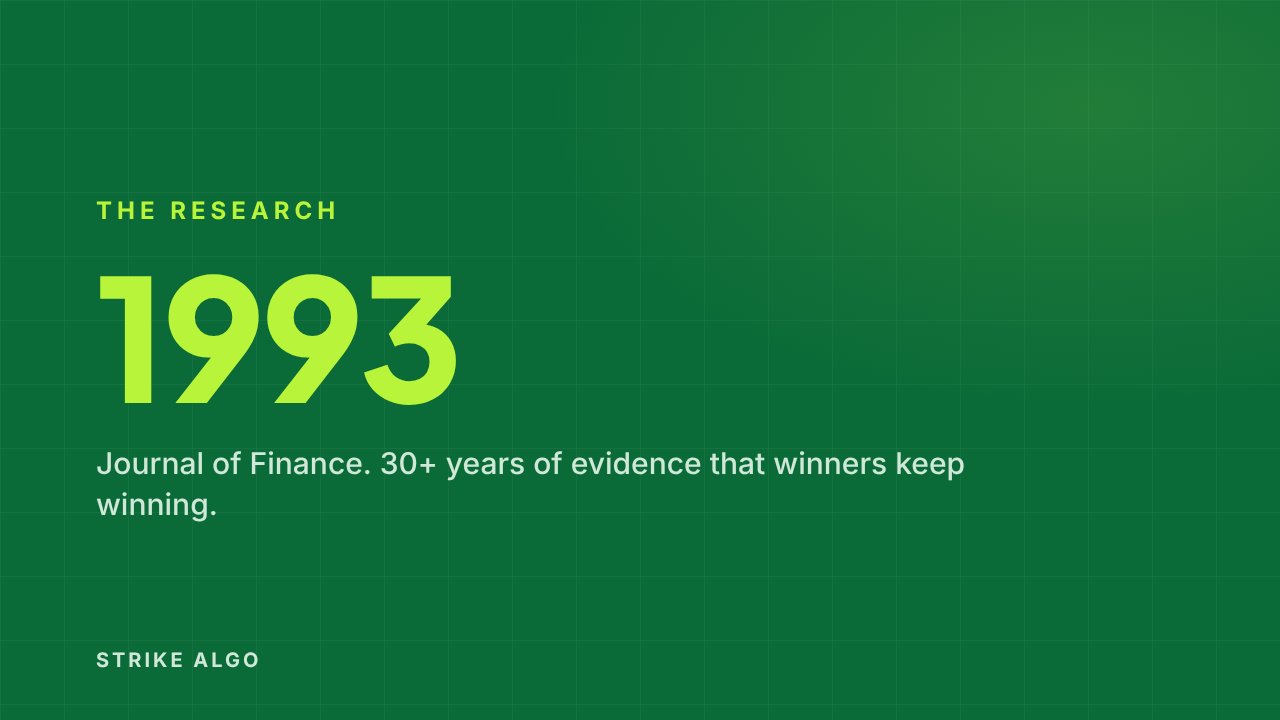
In 1993, two professors, Jegadeesh and Titman, published a paper in the Journal of Finance. They found that the stocks that had done best over the previous months tended to keep beating the worst ones over the following months.
In 2004, George and Hwang found that how close a stock trades to its 52-week high explains a lot of that effect. Highs tend to lead to more highs.
And in 2012, Moskowitz, Ooi and Pedersen found the same kind of trend persistence across different asset classes and long stretches of time.
Today the biggest asset manager in the world, BlackRock, runs about 20 billion dollars in a momentum fund. This is real, and it’s mainstream.
Want to put 30 years of research to work in your own account?Book a call →Hear it from people who use Strike People are slow. Trends are sticky.
So why does it work? There are a few explanations, and they all come back to people.
First, good news sinks in slowly. When a company’s business really changes, investors don’t adjust overnight. They adjust over months. So the price keeps climbing as the market catches up.
Second, money follows money. As a stock leads, more people notice it, more funds buy it, and that buying pushes it further.
And third, emotion actually works against us here. Most people sell their winners too early, because they’re scared to give back the gain. A rules-based system doesn’t feel that. It holds what’s working until the ranking says it isn’t anymore.
Momentum pays in bursts.
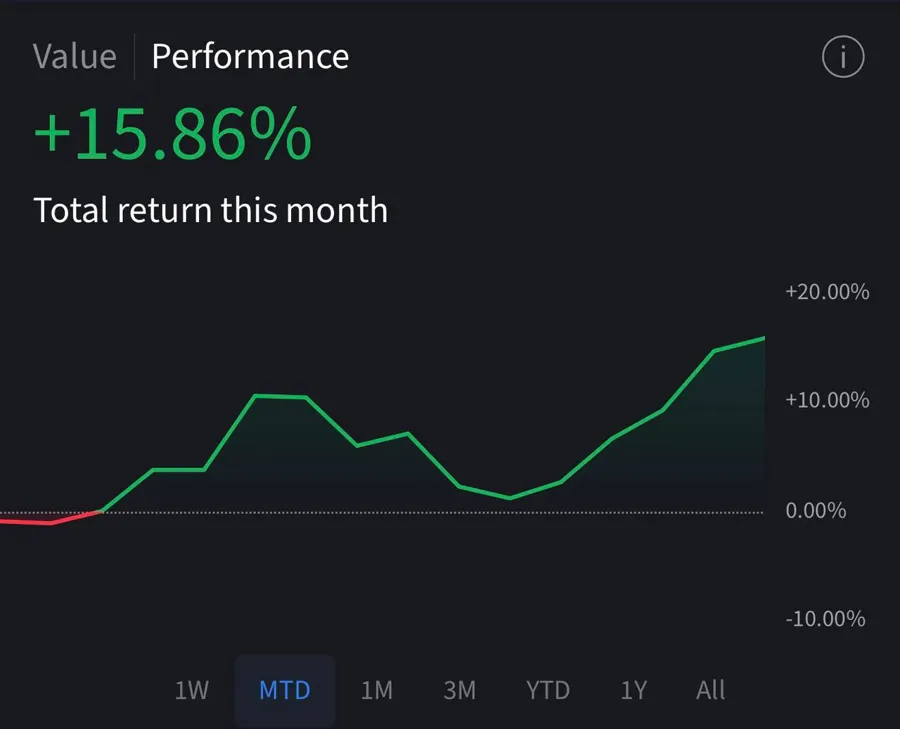
Now the catch. Momentum doesn’t pay a little bit every month. It pays in bursts, and in between, it can be flat or it can fall hard.
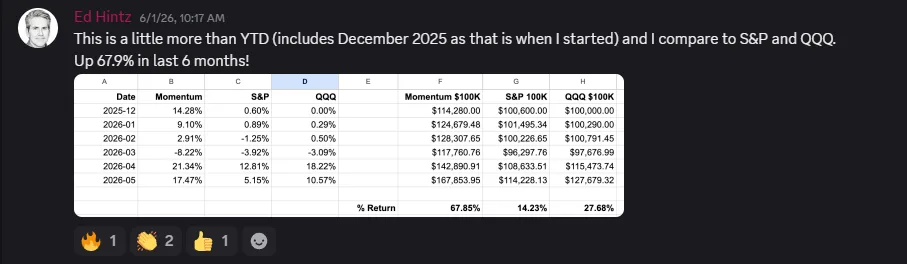
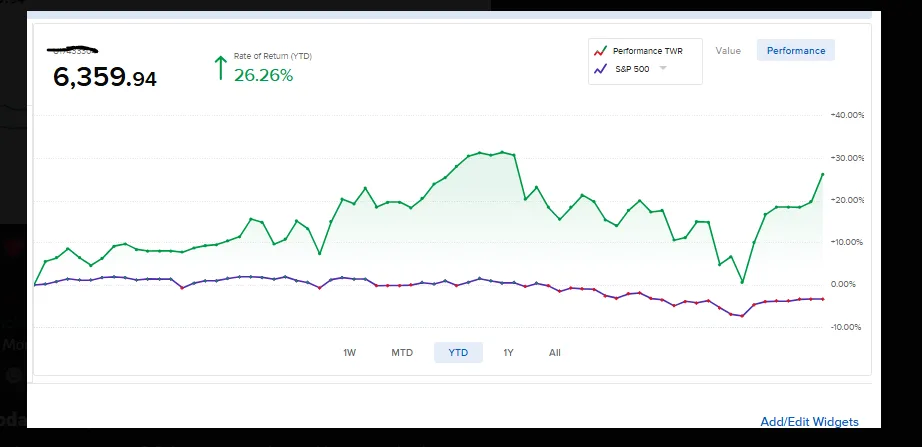
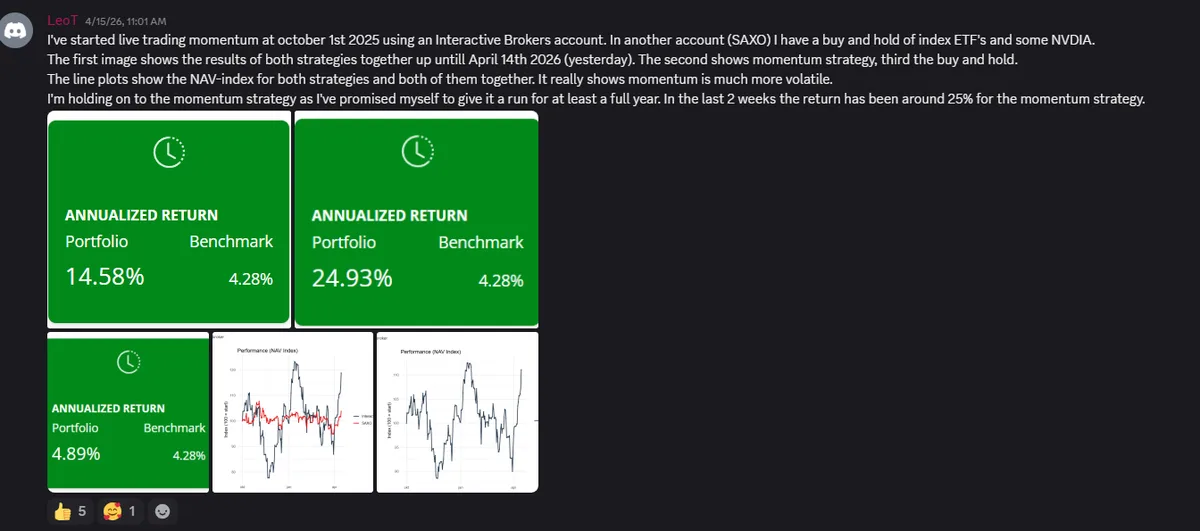
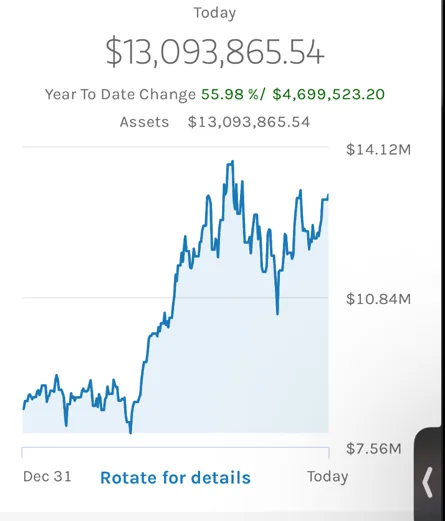
Look at our own record. In 2021, Strike was up 0.4 percent while the S&P was up 27. Our deepest drawdown was 37 percent. And in July 2026, we lost 22.1 percent in a single month.
That’s the price of admission. When leadership in the market suddenly flips, momentum gets hit. The people who do well with it are the ones who stay through those stretches. The people who lose with it are usually the ones who quit right before the next burst.
So before you do momentum in any form, ask yourself honestly: could you sit through a month like that?
See momentum run with rules.
So that’s momentum investing. Own what’s been rising strongest, because winners tend to keep winning for a while. It’s backed by more than 30 years of research, and it comes with real swings.
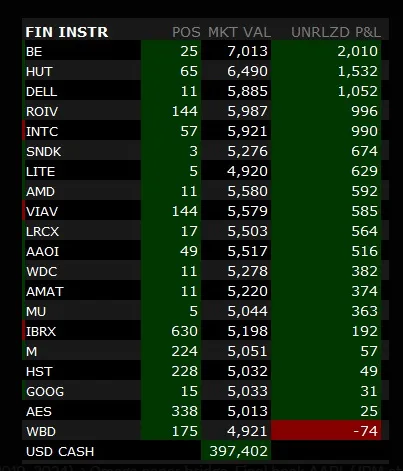
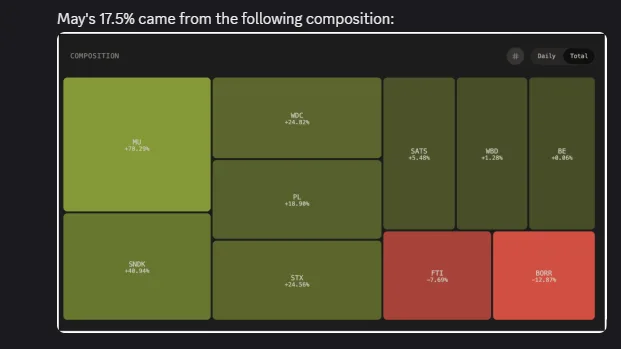
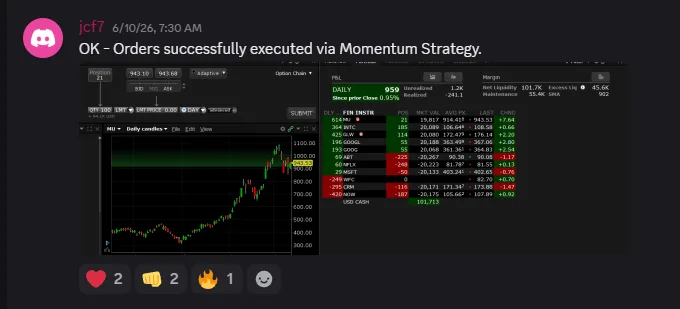
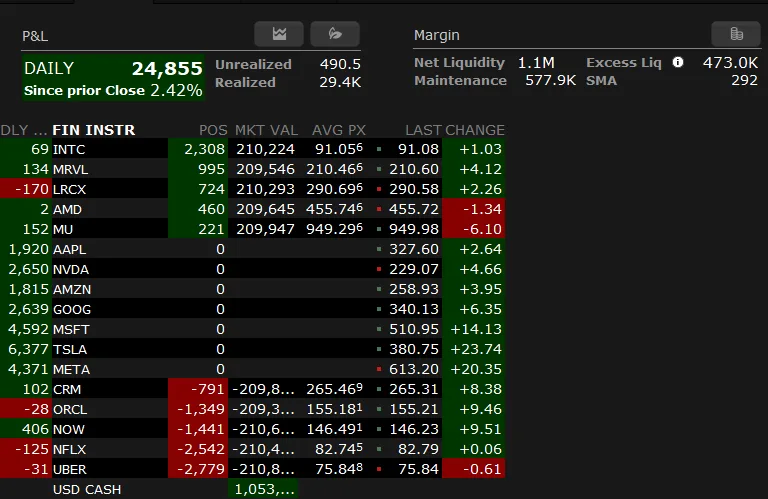
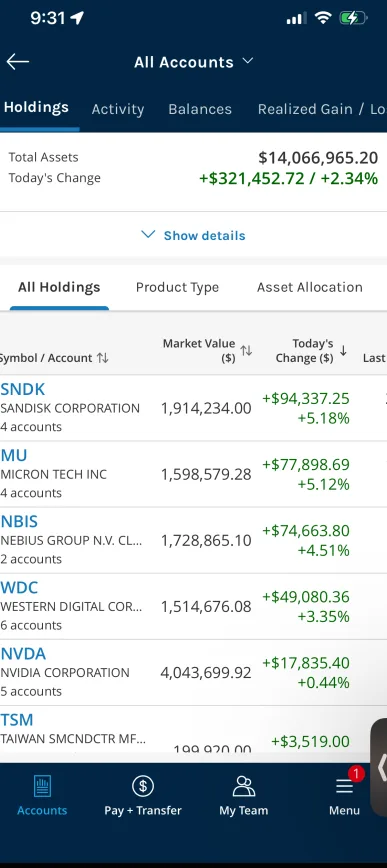
Strike is our version of it: about 450 stocks ranked every day, the strongest 20 held, rotated monthly, in your own account. If you want to see the full record or watch it run live, go to strikealgo.net and book a call.
Why this matters if you’re considering Strike
Momentum works best for people who stick with it through the quiet stretches. That’s the hard part, and it’s exactly what Strike automates: it ranks the market every day and rotates every month, so you’re not fighting your own emotions. A call is the fastest way to see if it fits you.
What happens on your call1We open the record togetherThe verified report, every month, the good and the bad. Ask anything.
2We map it to your accountHow Strike would run in your own Interactive Brokers account, the minimum, and what the swings could feel like.
3You decidePaper trade first if you like. No pressure, and if it isn’t a fit, we’ll tell you.
$100,000, same months
Jegadeesh & Titman 1993George & Hwang 2004Moskowitz, Ooi & Pedersen 2012
$100,000 invested April 2020, value September 30, 2026. MTUM NAV total returns per BlackRock. Strike: verified model record, gross of fees. Same months.

 Click to watch the video2:40 · Turn your sound on 🔊